
A guide to the idea
What is singularity
What happens when technology can improve the intelligence that creates it?
The technological singularity is a hypothetical turning point at which technological change, often driven by intelligence beyond human capabilities, becomes so rapid or profound that familiar ways of predicting the future break down. It is a family of ideas, rather than a single agreed scientific theory or a date on the calendar.
One influential version centres on feedback: an AI system helps design a more capable system, which can then accelerate the next round of research. Other versions emphasise human augmentation or the broader acceleration of technology. Neither the speed nor the inevitability of such a transition is established.
Where the idea came from
In a 1958 recollection of John von Neumann, mathematician Stanislaw Ulam described a conversation about accelerating technology and an approaching singularity in human history. This early use concerned technological change broadly. It was not a detailed prediction about today's AI. Read Ulam's recollection.
In 1965, statistician I. J. Good set out a more specific mechanism in Speculations Concerning the First Ultraintelligent Machine. A machine better than humans at intellectual work, he argued, could also design better machines, creating an intelligence explosion. Good also raised the problem of keeping such a machine under human control. Read Good's paper.
Vernor Vinge's 1993 essay, The Coming Technological Singularity, made greater-than-human intelligence central to the idea. He explored several routes to it, including AI, computer networks and closer links between humans and computers, and argued that its consequences would be difficult to foresee. Read Vinge's essay.
Ray Kurzweil brought the idea to a wider audience through books including The Singularity Is Near (2005). His account emphasises accelerating technological progress and the integration of people and machines. Its forecasts remain predictions, not settled findings. Explore Kurzweil's book.
Why it matters now
AI is already being used to write software and assist research. Anthropic's study of its own engineers offers one account of that shift, with limits that make generalisation difficult. These uses bring the question of AI accelerating AI development into practical focus.
Our view is that the pace of change warrants close reporting. That does not establish that a singularity has occurred or will occur. A useful discussion separates demonstrated capabilities, research hypotheses and forecasts about the future.
What remains open
Can systems reliably carry out long research projects and improve their own designs? How much will progress depend on human judgement, new data, energy, chips and physical experiments? Could improvements arrive gradually, or reinforce one another quickly?
There are political questions as well: who controls powerful systems, who benefits from their use and how their behaviour can be evaluated and governed. No agreed test tells us when the singularity begins. The value of the idea lies in examining these possibilities carefully, without mistaking a compelling scenario for an observed fact.
The people behind the idea
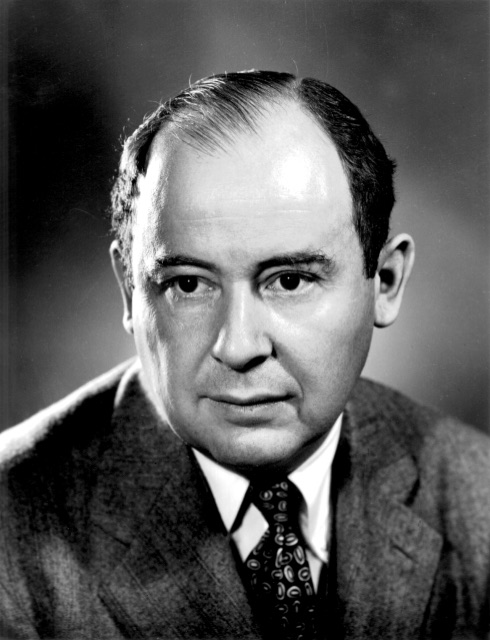
John von Neumann
Mathematician and computing pioneer (1903 to 1957)
PioneerThe first recorded use of "singularity" in this sense. Stanislaw Ulam's 1958 tribute recalls a conversation in which von Neumann described accelerating technological progress as approaching an essential singularity in human history, beyond which affairs as we know them could not continue.
- Ulam, "Tribute to John von Neumann" (Bulletin of the AMS) (1958)
- First Draft of a Report on the EDVAC (1945)
- The Computer and the Brain (1958)
Photo: Los Alamos National Laboratory, Attribution (LANL) via Wikimedia Commons

I. J. Good
Mathematician and Bletchley Park codebreaker (1916 to 2009)
PioneerCoined the "intelligence explosion". In 1965 he argued that a machine able to surpass human intellect could design still better machines, so the first such machine could be the last invention humanity needs to make, provided it stays under our control.
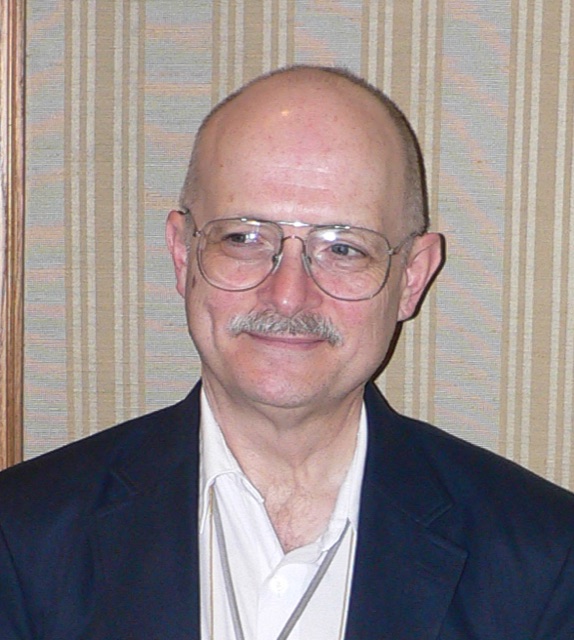
Vernor Vinge
Mathematician, computer scientist and science fiction author (1944 to 2024)
PioneerGave the idea its modern name. His 1993 NASA symposium essay opens: "Within thirty years, we will have the technological means to create superhuman intelligence. Shortly after, the human era will be ended."
Photo: Raul654, CC BY-SA 3.0 via Wikimedia Commons
.jpg)
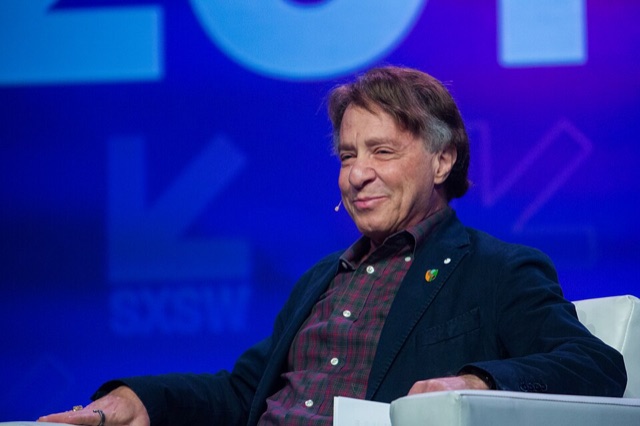
Ray Kurzweil
Inventor, futurist and author
ProponentThe idea's best known champion. He predicts human-level AI by 2029 and a singularity around 2045, when people merge with the intelligence they have created and capability grows by orders of magnitude.
Photo: nrkbeta, CC BY-SA 2.0 via Wikimedia Commons
.jpg)
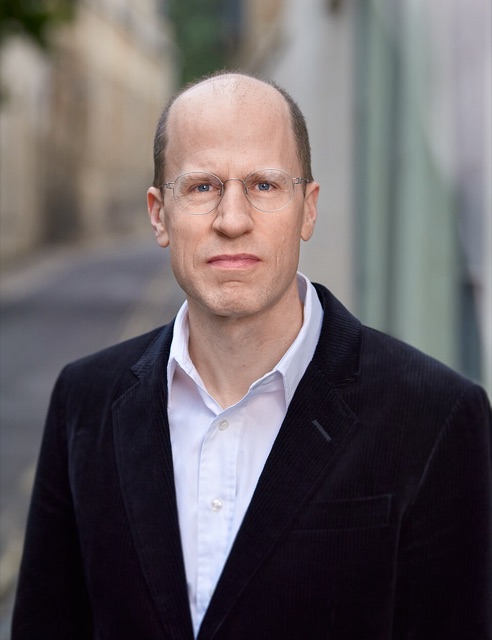
Nick Bostrom
Philosopher, founding director of Oxford's Future of Humanity Institute (2005 to 2024)
ProponentTakes superintelligence seriously as a possibility this century and argues that controlling it, the alignment problem, may be the most important challenge humanity faces before it arrives.
- Superintelligence: Paths, Dangers, Strategies (2014)
- Deep Utopia: Life and Meaning in a Solved World (2024)
Photo: Future of Humanity Institute, CC BY 4.0 via Wikimedia Commons

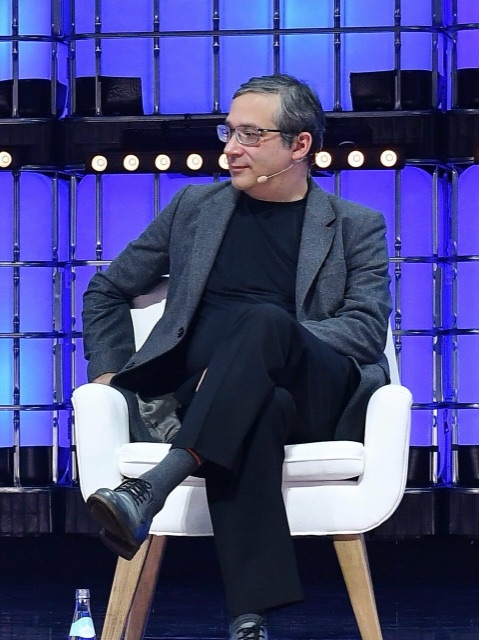
Gary Marcus
Cognitive scientist, professor emeritus at New York University
SkepticA prominent critic of the hype. He argues that today's deep learning and large language models lack reliable reasoning and understanding, so claims of imminent superintelligence are premature.
Photo: Web Summit, CC BY 2.0 via Wikimedia Commons

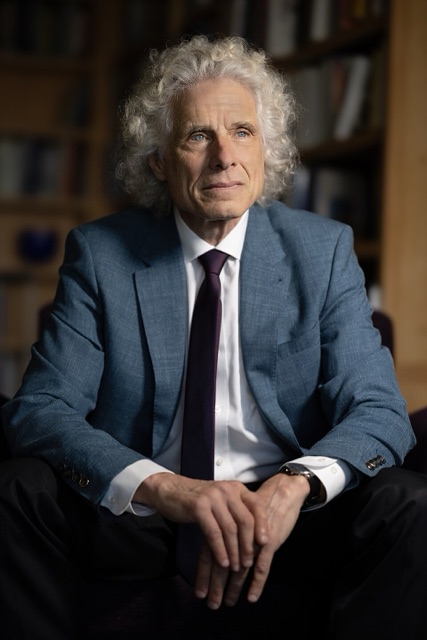
Steven Pinker
Cognitive psychologist, Harvard University
SkepticRejects the premise outright. Asked by IEEE Spectrum in 2008, he said: "There is not the slightest reason to believe in a coming singularity."
- IEEE Spectrum: Tech Luminaries Address Singularity (2008)
- How the Mind Works (1997)
- Enlightenment Now (2018)
Photo: Christopher Michel, CC BY-SA 4.0 via Wikimedia Commons

Further reading and organisations
Singularity University
Education and community programs on exponential technologies, co-founded by Ray Kurzweil and Peter Diamandis in 2008.
Machine Intelligence Research Institute (MIRI)
Founded in 2000 as the Singularity Institute for Artificial Intelligence; researches how to make smarter-than-human AI safe.
Future of Life Institute
Works to steer transformative technologies, including advanced AI, away from extreme risks and toward broad benefit.
Center for AI Safety
Research and field-building to reduce societal-scale risks from artificial intelligence.
Humanity+
The international transhumanist organisation, promoting the ethical use of technology to expand human capacities.
Technological singularity (Wikipedia)
A well sourced overview of the concept, its history and its critics.