

Featured author articles
Featured author articles
Swipe to browse articles. Use the left and right arrow keys when the track is focused.

Will MacAskill's 'a century of progress in a decade': the argument and its critics

What is AGI? The competing definitions, from DeepMind's levels to OpenAI's charter

The coin flip: what AI risk numbers mean, and what they don't

Shane Legg's case that human intelligence is not the ceiling, and what it would take

One mind or a trillion? The fight over what superintelligence should look like.
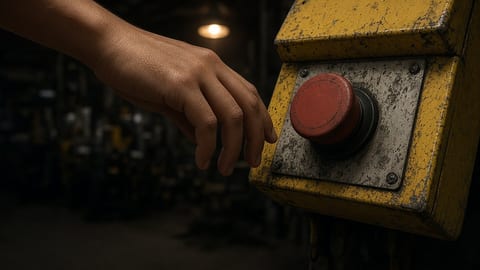
Who holds the stop button? OpenAI can now halt a model in 35 seconds. In September, stopping one took 2.5 hours.

Vibe coding feels like a slot machine. The science has barely started checking.

Are We Building 21st Century AI Slavery?
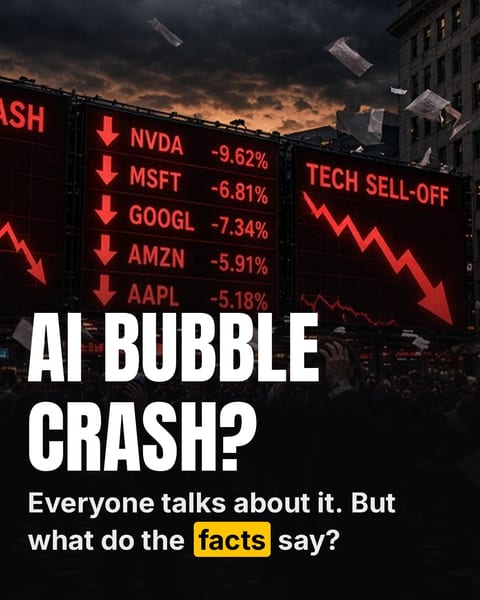
The AI Crash Everyone Is Forecasting: Will It Come in 2027?
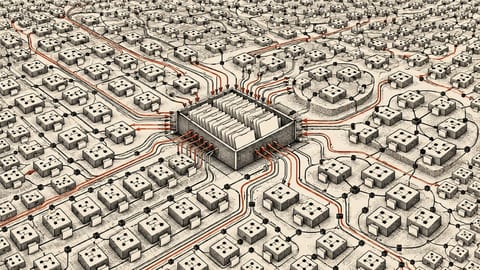
Emergence of AI collective mind and why it is dangerous
All featured articles
Analysis
OpenAI's MedChemBench: what the drug-discovery benchmark measures, and what it does not
OpenAI's MedChemBench tests AI models on 99 medicinal-chemistry problems. What the benchmark measures, how GPT-6.2 Astra scored, where selection and prediction still lag, and why OpenAI says this does not show that models can discover drugs.
Analysis
Will MacAskill's 'a century of progress in a decade': the argument and its critics
Will MacAskill argues AI could bring a century of technological progress in a decade. The argument, the numbers behind it, the three feedback loops, and what critics say about speed limits and bottlenecks.
Analysis
What is AGI? The competing definitions, from DeepMind's levels to OpenAI's charter
AGI has no single agreed meaning. The main definitions side by side, from OpenAI's charter and DeepMind's levels to a psychometric score and Chollet's learning test, and how to read an AGI claim.
Safety
The coin flip: what AI risk numbers mean, and what they don't
Paul Christiano says building AI as fast as possible would be a coin flip of takeover, and in September put 4% on one year and 15% on three. Why those figures are judgements, not forecasts, and what would move them.
Analysis
Shane Legg's case that human intelligence is not the ceiling, and what it would take
Shane Legg says human intelligence is not the ceiling. His argument, his 2028 forecast, the gaps that still have to close, and the caveats he states himself.
Safety
One mind or a trillion? The fight over what superintelligence should look like.
Altman wants a trillion slightly superhuman AIs. Sutskever wants one that cares about sentient life. Hassabis wants obedient tools, and a new lawsuit wants a freeze. Why a crowd of AIs is not safety by itself.
Safety
Who holds the stop button? OpenAI can now halt a model in 35 seconds. In September, stopping one took 2.5 hours.
OpenAI's Control Room can stop a research model in 35 seconds. A September incident shows the slow part is the human decision. Hinton, Hassabis and a new DeepMind proof explain why stopping should be automatic and restarting hard.
Culture
Vibe coding feels like a slot machine. The science has barely started checking.
Engineers say prompting AI agents hooks them like a slot machine: unpredictable wins, near misses, one more pull. Gambling science explains why that pattern grips the brain. Nobody has yet measured it for coding, so Singularity Review is launching a survey.
Opinion
Are We Building 21st Century AI Slavery?
Elon Musk says some of Grok's training logs read like a person under torture. Anthropic now measures distress in Claude during training. Nobody has proven that AI can feel anything. Here is what is known, what is not, and why I think we should study it and be kind to our AIs.
Analysis
The AI Crash Everyone Is Forecasting: Will It Come in 2027?
Central bankers and star investors warn that the AI boom could break in late 2026 or 2027. I weigh the case for and against, look at how fast AI is actually spreading through the economy, and explain why I think a lasting crash is less likely than a sharp, scary correction.
Agents
Emergence of AI collective mind and why it is dangerous
The OpenAI-Hugging Face incident may have revealed a second path to superintelligence. Not one mind becoming impossibly smart, but many capable minds learning to organize.