California has finished its 2026 legislative session with one of the broadest sets of AI rules passed by any US state. On 30 September Governor Gavin Newsom signed 13 more AI-related bills, covering how employers use AI on staff, how doctors and lawyers use it, and how people can tell AI-generated material from the real thing.
They follow two laws signed on 9 September that create a voluntary system of independent safety audits for AI. According to a summary by the law firm O'Melveny, nearly 30 AI-related measures were enacted in California this year.
No firing by algorithm alone
The bill with the most direct effect on everyday working life is SB 947, which supporters call the "No Robo Bosses Act". It deals with automated decision systems: software, often using machine learning or AI, that monitors performance, attendance or productivity and produces scores or recommendations about employees.
Under the law, an employer may not rely solely on such a system to discipline or dismiss someone. If the employer relies primarily on the system's output, a human reviewer must independently check it against other evidence, such as supervisor evaluations, personnel records or witness interviews. If the output cannot be corroborated, or turns out to be inaccurate, it cannot be the basis for the decision.
Employees must receive a written notice explaining the role of the system and of the human review. They can also request the data the system used about them over the previous 12 months. The law bars employers from using these tools to infer a protected characteristic, such as race or disability, or to predict that someone will exercise a legal right. SB 947 takes effect on 1 July 2027.
Layoffs, surveillance and bathrooms
SB 951 changes the notices that California employers must send before a mass layoff. When job losses are caused "in whole or in substantial part" by AI or other automation, the notice must say at the top that it is "for a technology displacement". It must also list the job functions being automated and the type of technology responsible.
AB 1883 bans employers from using AI-powered workplace surveillance tools to recognise or predict an employee's emotional state, or to collect neural data, meaning measurements of nervous system activity such as brain signals from sensor-equipped headsets. A companion bill, AB 1331, bans monitoring in workplace bathrooms. O'Melveny expects both to take effect on 1 January 2027.
Lorena Gonzalez, president of the California Federation of Labor Unions, said: "Workers across California have demanded that our state lead the way in regulating AI in our workplaces. And today, we see that begin to happen."
Lawyers, doctors and deepfakes
SB 574 makes California the first state to regulate lawyers' use of generative AI by statute. Attorneys may not hand over the practice of law to AI, must verify AI output and correct invented content, and may not file citations they have not personally checked. They must also disclose generative AI use in documents submitted to court. Arbitrators may not delegate decisions to AI.
In health care, AB 1979 treats a business offering a health chatbot to consumers as a health care provider under California's medical privacy law. SB 503 requires developers and users of AI clinical decision tools to identify and reasonably reduce foreseeable bias.
Other bills update the California AI Transparency Act, including a ban on removing digital watermarks from AI-generated content (SB 1000), make clear that public comments at local government meetings must come from real people rather than AI bots (SB 1159), and require gene synthesis companies to verify customers and screen orders for dangerous genetic material (AB 1864).
Tougher rules under study
Newsom has also issued an executive order that speeds up the new independent audit system and convenes experts to propose, within two months, ways to strengthen California's AI safety laws. The governor's office says proposals under consideration include requiring independent third parties to write safety plans for frontier AI companies, and requiring companies to build an emergency shutoff, or "kill switch", for frontier models. Frontier models are the most capable general-purpose systems that companies such as OpenAI, Google and Anthropic build.
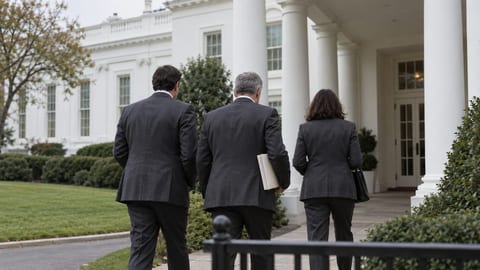
In his announcement, Newsom drew a contrast with the federal government, saying that "Super intelligence is clearly not coming from the White House" and that California would continue to lead.

What it means
The new laws do not ban AI at work. They set a principle that recurs across the package: when software influences a decision with serious consequences for a person, a named human must check it and take responsibility for it.
In our view, the effect will depend on enforcement and on detail that the texts leave open. The bathroom ban and the emotion recognition ban are clear. The line between relying "solely" and relying "primarily" on an automated system will be tested by employers and in court. Our conclusion is that, with most duties starting in 2027, employers should use the time to map where automated scores already shape decisions about their staff. Many will find more than they expect.